2026-10-15 ·
Spotting Hidden Moisture in Beachside Playa Del Rey Properties
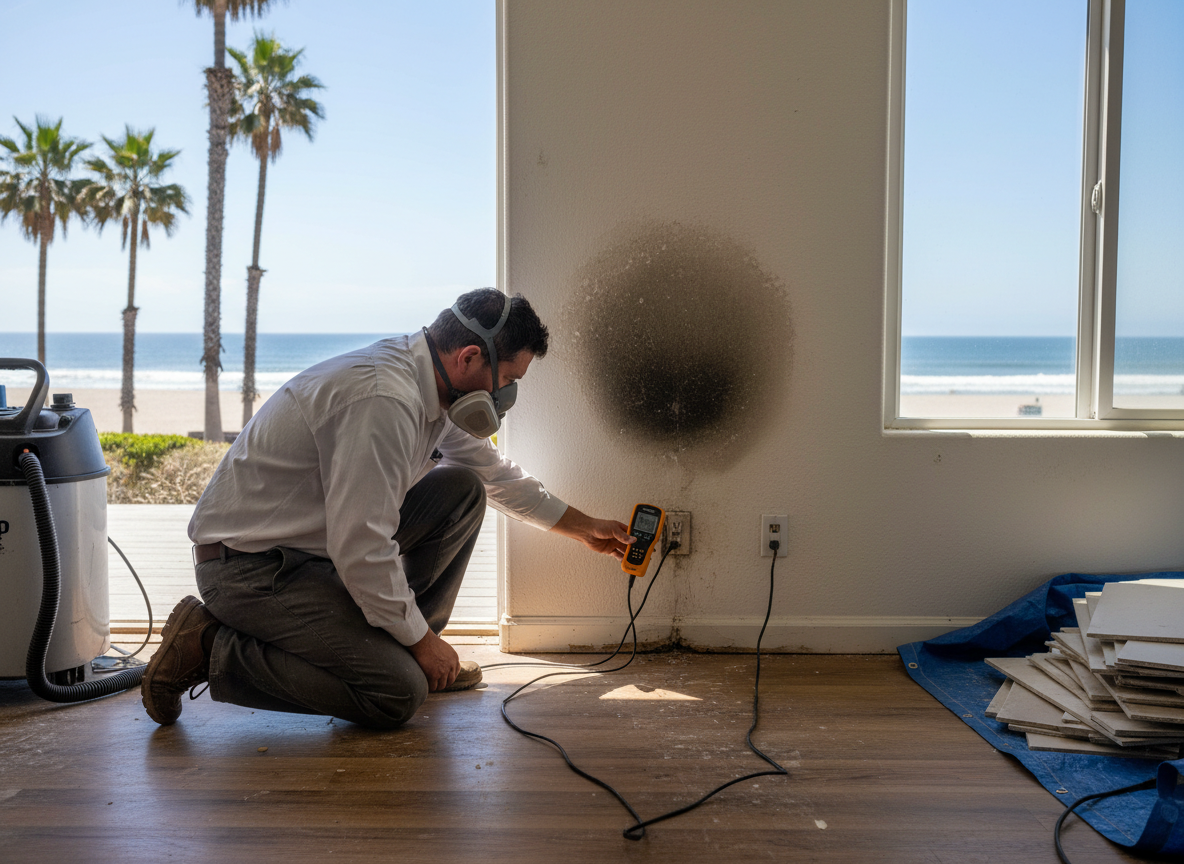
Hidden moisture in Playa Del Rey beachside properties typically appears first as musty odors or slight wall discoloration within 24-72 hours after marine layer fog events, especially in homes built before 1980 near Playa Del Rey Beach. Older wood-frame houses in Playa Del Rey Village absorb salt-laden air that travels from Dockweiler State Beach, allowing water vapor to penetrate plaster and drywall without visible leaks. This process accelerates in the mild coastal climate where temperatures rarely drop below 50 degrees, keeping relative humidity elevated for days at a time.
Visual and Sensory Clues in Playa Del Rey Village Homes
Residents often notice buckling baseboards or peeling paint along exterior walls facing the ocean first. These signs appear because salt air from the marine layer corrodes fasteners and softens wood framing in homes 40-70 years old. Warped hardwood floors near door thresholds also indicate trapped moisture from Ballona Creek tidal influences that push damp air inland during evening fog. A persistent earthy smell in closets or under sinks signals hidden saturation even when surfaces feel dry to the touch. Checking for these clues after several consecutive foggy mornings helps catch problems before drywall delaminates in Silicon Beach properties.
How Marine Layer Fog Drives Hidden Moisture Near Dockweiler State Beach
Marine layer fog rolls in most nights from May through October, depositing fine water droplets on roofs and siding that seep into attics and wall cavities over time. In Playa Del Rey, this fog interacts with Ballona Creek's tidal flow to raise ground moisture levels around foundations, allowing vapor to rise into crawl spaces of single-story homes common in the area. Unlike inland Los Angeles neighborhoods, the constant 60-70% humidity prevents normal drying, so small leaks from plumbing or roof vents remain wet for weeks. Properties within a half-mile of Playa Del Rey Beach experience the strongest effect because prevailing winds carry the moisture directly inland rather than dissipating it.
Inspecting Crawl Spaces and Attics in Coastal Construction
Start by examining insulation in attics for dark spots or compressed areas where moisture has settled, particularly above bathrooms and kitchens in homes near Marina del Rey. Use a moisture meter on joists and subflooring in crawl spaces, targeting readings above 15% that indicate ongoing absorption from nearby Ballona Creek humidity. Look for efflorescence on concrete piers or rusted metal straps, both common in 1960s-1980s builds throughout Playa Del Rey Village. Pay special attention to areas where ductwork runs close to exterior walls, as condensation forms quickly when marine fog meets cooler indoor air. Document any soft spots in plywood sheathing before they spread to adjacent rooms.
Professional Detection Tools and Next Steps for Silicon Beach Properties
Infrared cameras reveal temperature differences behind walls where hidden moisture cools surfaces by 3-5 degrees compared to dry areas, useful after fog events in Culver City border homes. Pin-type meters provide precise readings at multiple depths in framing lumber, confirming saturation that visual checks miss. When readings stay elevated, water damage mitigation prevents further spread into living spaces. For properties showing repeated issues, mold remediation after water damage addresses secondary growth common in humid coastal attics. Readers facing ongoing problems can review Mold Prevention After Storms in Playa Del Rey for seasonal strategies tailored to the local marine climate.