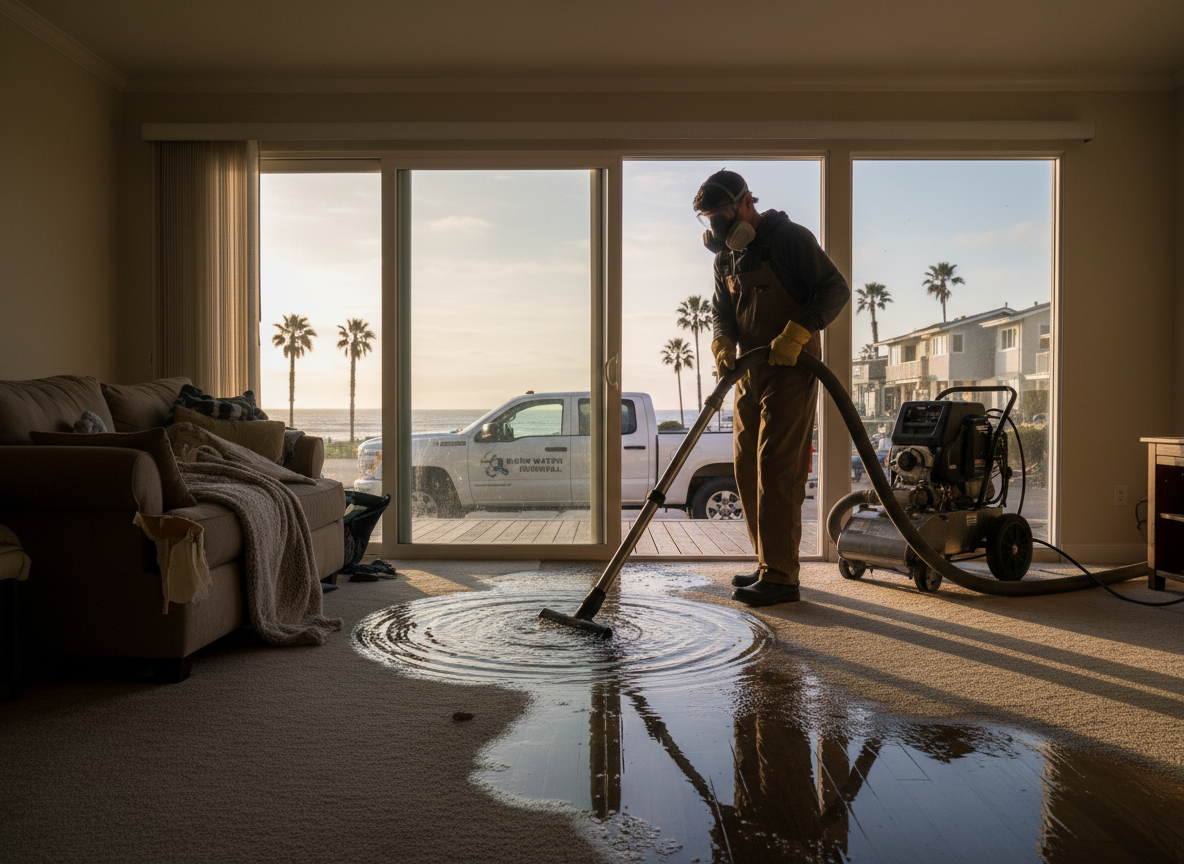
Rapid water extraction in Playa Del Rey must account for the marine layer fog that keeps moisture high even after rain stops. Homes in Playa Del Rey Village and near Ballona Creek often sit on older slabs or raised foundations that trap water under flooring when the creek backs up during winter storms. Technicians pull standing water with truck-mounted extractors first, then use moisture meters to find hidden saturation in subfloors before mold sets in from the constant damp air.
Silicon Beach apartments and single-family homes built before 1980 frequently have lath-and-plaster walls that hold water longer than drywall. After a pipe burst or tidal surge near Playa Del Rey Beach, crews cut small inspection holes low on walls to confirm saturation levels and direct airflow exactly where needed. Skipping this step leaves pockets of moisture that later cause peeling paint or musty odors weeks after the initial event.
Equipment placement matters on the narrow streets around Dockweiler State Beach. Large dehumidifiers are staged on driveways rather than inside garages to avoid tripping breakers in older electrical panels common in the neighborhood. Continuous monitoring every four hours prevents over-drying that can crack hardwood floors found in many Culver City-adjacent properties.
Final clearance testing uses both pin and non-invasive meters plus thermal imaging to verify drywall and concrete have returned to the dry standard for Los Angeles coastal zones. Only then is containment removed so residents can safely return without hidden moisture migrating into adjacent rooms.
Technician insight
In Playa Del Rey, the thing that catches most people out with Rapid water extraction is marine layer fog that keeps relative humidity above 70 percent for days after the rain ends. Near Ballona Creek, water migrates under older concrete slabs faster than in inland neighborhoods, so extraction has to continue even after visible puddles are gone or you will chase mold later.
Creek Overflow Into Garage
Winter rain caused Ballona Creek to overtop near a home in Playa Del Rey Village. Water entered the attached garage and wicked into the laundry room drywall. Crews extracted standing water, mapped moisture behind the washer, and ran drying equipment for 48 hours until readings matched surrounding dry areas. The homeowner avoided mold growth without removing cabinets.
How it works
- 1
Arrival And Containment
Technicians arrive within the hour, set up containment barriers, and locate the water source using the property layout near Ballona Creek or the beach.
- 2
Standing Water Removal
Truck-mounted pumps and portable extractors pull bulk water from floors, carpets, and low areas before it soaks deeper into older slab foundations.
- 3
Moisture Mapping
Infrared cameras and meters identify hidden water in walls and under flooring typical of Playa Del Rey Village construction.
- 4
Drying And Monitoring
Air movers and dehumidifiers run in targeted zones with checks every few hours until readings meet coastal dry standards.
- 5
Clearance And Cleanup
Final verification confirms all affected materials are dry, then equipment is removed and the space is returned to normal use.
Pricing
Pricing depends on water volume, affected square footage, and how many wall cavities require opening in older Playa Del Rey homes.