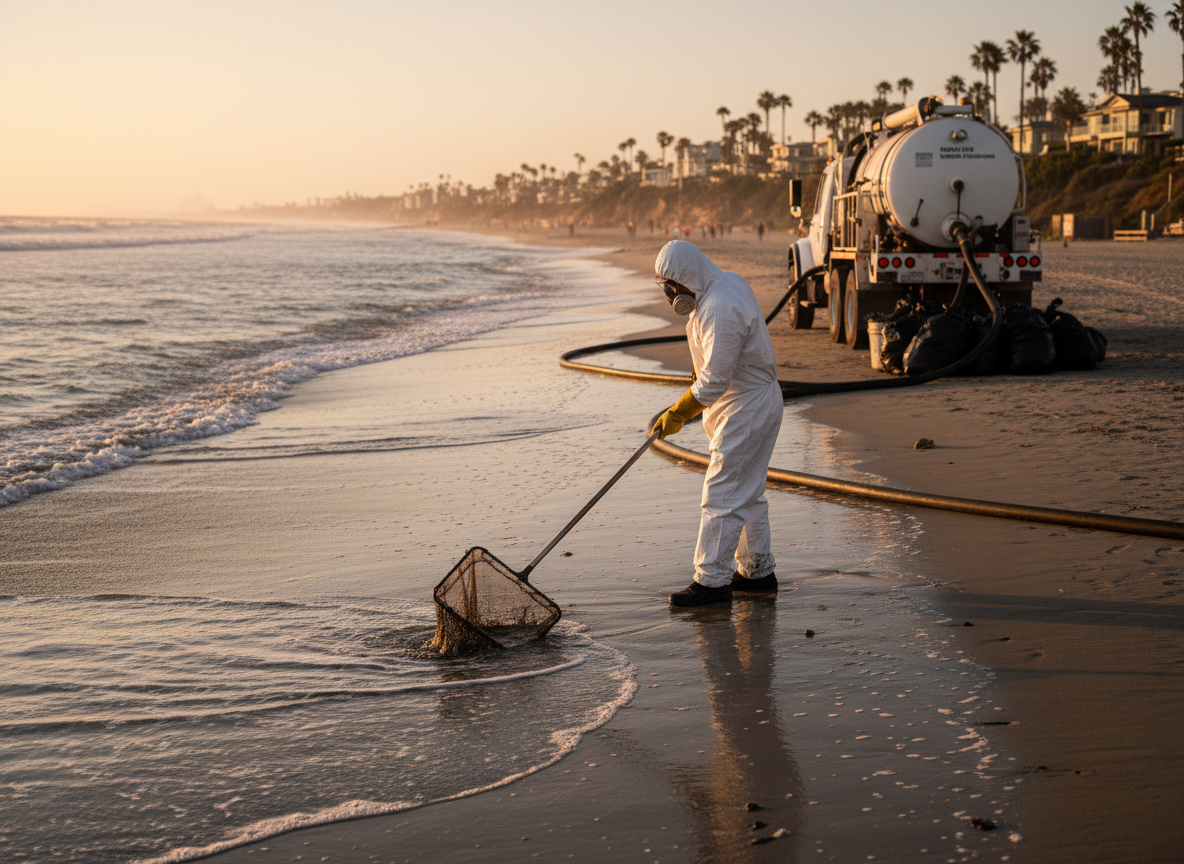
Sewage backups in Playa Del Rey often trace to aging cast-iron lines under 1950s bungalows in Playa Del Rey Village or tree-root intrusion along Ballona Creek. Marine layer fog keeps humidity elevated for days, so extraction alone is never enough; we run commercial air movers and dehumidifiers until moisture readings drop below 15 percent on subfloors. Contaminated water can migrate under pier-and-beam foundations common near Dockweiler State Beach, requiring targeted removal of baseboards and insulation before any visible signs appear.
We follow Los Angeles County health guidelines for Category 3 water, using EPA-registered disinfectants on all porous materials that cannot be salvaged. In homes close to Marina del Rey, tidal influence can push effluent back through floor drains during king tides, so we install temporary backflow preventers during cleanup. Edge cases include multi-unit buildings in Silicon Beach where one unit's line failure affects shared walls; we isolate HVAC returns immediately to prevent aerosol spread into neighboring units.
Homeowners in Culver City and adjacent areas sometimes attempt DIY enzyme cleaners after a minor overflow, but these do not address hidden saturation in crawl spaces. We document every step with photos and moisture logs so insurance adjusters see the full scope without delay. Final clearance includes ATP swab testing to confirm bacterial counts meet safe levels before any reconstruction begins.
Technician insight
In Playa Del Rey, the thing that catches most people out with sewage cleanup is the marine layer fog that keeps crawl spaces under older homes near Ballona Creek damp for weeks, so even thorough extraction can leave hidden saturation if you skip extended dehumidification.
Ballona Creek Backup After King Tide
A homeowner in Playa Del Rey Village reported sewage rising through a bathroom floor drain after a king tide. We traced the line failure to a cracked clay pipe under the 1960s slab, extracted the effluent, and ran drying equipment for four days until moisture readings stabilized. The crawl space required targeted insulation removal to prevent hidden mold growth common in the area's foggy microclimate.
How it works
- 1
Emergency Assessment
We arrive within the hour, locate the source, and test affected materials with moisture meters while mapping migration paths through the home.
- 2
Containment And Extraction
Negative air machines isolate the zone, then truck-mounted pumps remove standing sewage before any drying equipment is placed.
- 3
Disinfection And Drying
EPA-registered agents treat all surfaces; industrial dehumidifiers and air movers run until readings confirm safe moisture levels despite coastal fog.
- 4
Final Clearance And Restoration
ATP testing verifies sanitation; we remove damaged materials and coordinate with local contractors for any needed rebuild work.
Pricing
Pricing depends on volume of material removed, square footage affected, and whether crawl-space or wall-cavity access is required; we provide a written scope after the initial inspection.